Citrus caviar: what it is, how we grow it in Valencia and how to use it in the kitchen
If someone tells you there is a citrus fruit whose flesh looks like caviar, it sounds made up. But citrus caviar — also known as finger lime — is real, Australian in origin and one of the most interesting ingredients we have chosen to grow in our Valencia grove.
Microcitrus australasica produces an elongated fruit, roughly finger-sized, whose flesh breaks down into small spherical vesicles that burst in your mouth releasing a tart, aromatic and complex juice. It is not a garnish: it is an ingredient with its own personality that has been part of Aboriginal Australian diets for centuries.
What makes citrus caviar special
The fundamental difference from other citrus lies in the structure of the flesh. While an orange or a lemon has segments with fused juice vesicles, citrus caviar keeps each vesicle separate and intact. When you open the fruit, the spheres come loose like small translucent pearls that can be green, pink, red or even black depending on the variety.
The flavour also varies with the variety: from notes reminiscent of grapefruit and lime to more herbaceous and floral nuances. The acidity is pronounced but clean, without the bitterness that sometimes accompanies other citrus. That combination of explosive texture and concentrated flavour is what has made citrus caviar a star ingredient in fine dining.
From the Australian rainforest to the Valencian grove
Citrus caviar grows wild in the subtropical forests of eastern Australia, where Aboriginal communities have used it for thousands of years. Its arrival on the international culinary scene is far more recent — barely two decades — but its impact has been remarkable.
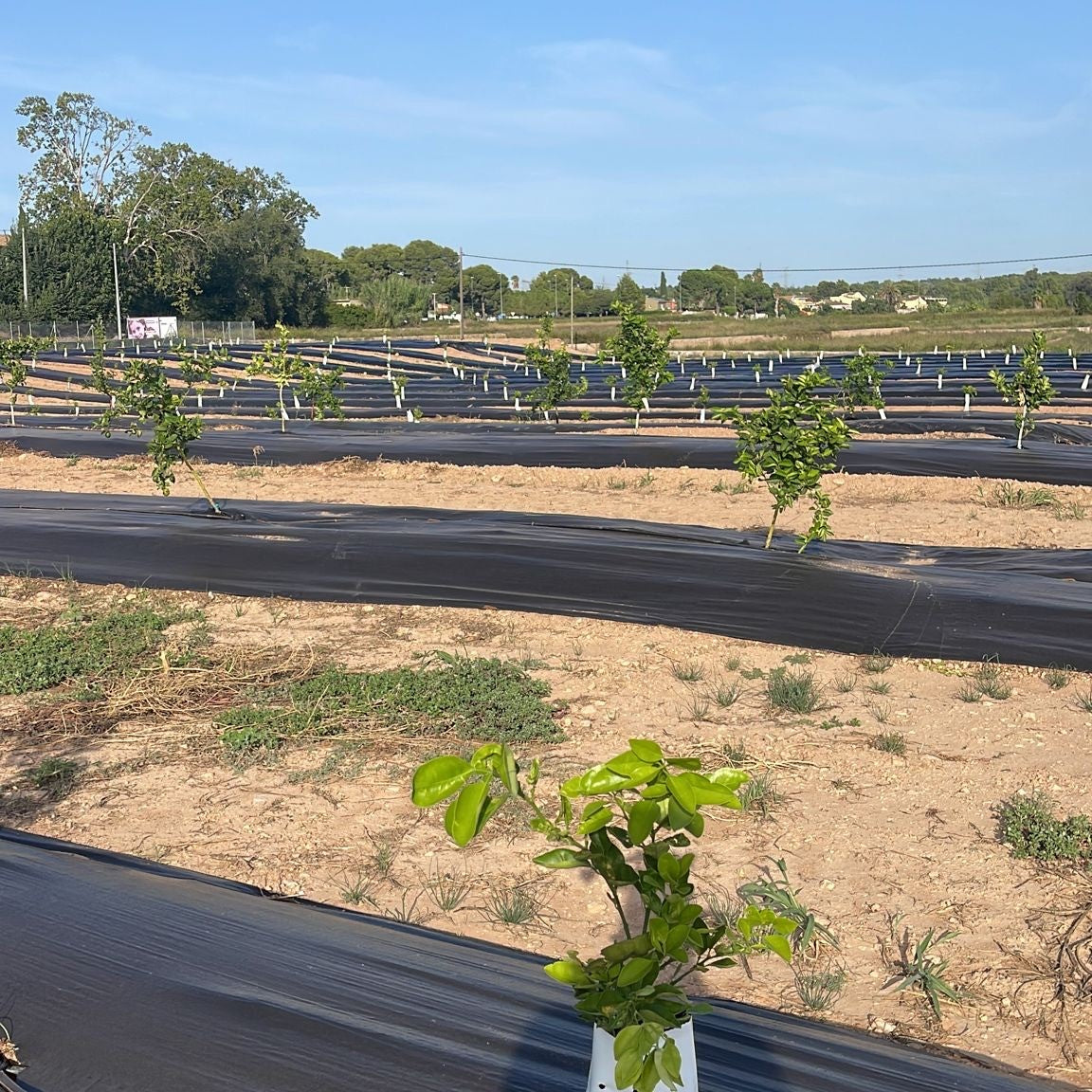
In our Valencia grove, the Mediterranean climate offers conditions compatible with this citrus fruit’s needs: mild winters, good sun exposure and well-drained soil. The tree is smaller than a conventional orange tree and somewhat more delicate, but it adapts well if protected from hard frosts.
Like everything we grow, our citrus caviar receives no post-harvest treatment. No wax, no fungicides. What grows on the tree is what reaches you. If you want to understand how the Mediterranean climate influences our citrus, we cover it in detail in another article.
How to use citrus caviar in the kitchen
Citrus caviar needs neither cooking nor elaborate preparation. Its charm lies in using it raw or adding it at the end, so the vesicles keep their texture and their burst in your mouth.
Over fish and seafood. A handful of citrus caviar pearls over a tuna tartare, oysters or ceviche. The acidity replaces conventional lemon and the texture adds a dimension that juice simply cannot provide.
With sushi and Asian dishes. Japanese chefs were among the first to adopt it outside Australia. It works on nigiri, in rolls or as an accompaniment to sashimi. The pearls bring acidity without diluting the flavour of the fish.
In salads. Over a salad of avocado, rocket and fresh cheese, citrus caviar acts as both dressing and texture at once. Every mouthful has its own burst of flavour.
In cocktails. A gin and tonic with citrus caviar pearls instead of the usual lime wedge. It is more than aesthetics: each sip releases small points of acidity that change the experience.
In desserts. Over panna cotta, an orange sorbet or a lemon tart. The contrast between the creaminess of the dessert and the tart explosion of the citrus caviar is hard to beat.
Frequently asked questions
Does citrus caviar taste like lime?
It has citrus notes reminiscent of lime and grapefruit, but with more complexity. Depending on the variety, it can have herbaceous, floral or even slightly peppery nuances. It is not simply “a lime in small format”.
How do you open and eat it?
Cut it in half lengthways and press from the outside, as if turning a sock inside out. The vesicles come out on their own, ready to use. No special utensils required.
Can you cook citrus caviar?
You can, but it loses part of its charm. Heat breaks the vesicles and removes the explosive texture that makes it unique. The best approach is to add it raw at the end of the preparation.
How long does it last once harvested?
In the fridge, citrus caviar keeps well for two to three weeks. The vesicles can be scooped out and frozen for later use, though the texture loses some firmness after thawing.