Lemon cake — easy recipe with real lemons
This cake has a history. Not just because the sponge recipe is Spanish — eighteenth century, when it was still called Pan de España — but because it is one of those recipes you make once and never stop making. Fifteen minutes of actual work, an hour in the oven, and you have a lemon cake that fills the house from the hallway.
The secret, as ever, is the ingredient. A lemon picked ripe from the tree has essential oils in the skin that one from cold storage has lost along the way. If you use fresh lemons from Valencia, the zest and juice do twice the work. You notice it in the aroma and you notice it in the taste.
Ingredients
For a 22 cm tin:
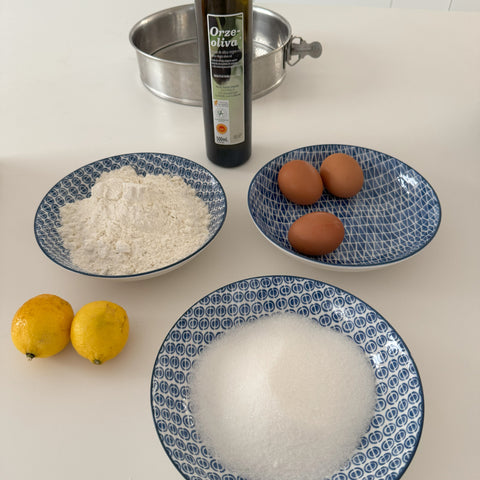
— 300 g plain flour
— 200 g caster sugar
— 6 large eggs
— 2 small lemons or 1 large (juice and zest)
— 100 ml olive oil
— 100 ml water
— 30 g baking powder (2 sachets)
For the glaze:
— 100 g icing sugar
— 2–3 tablespoons lemon juice
— Lemon zest
Step by step
1. Whisk. Beat the eggs with the sugar using a whisk until the mixture turns pale and roughly doubles in volume.
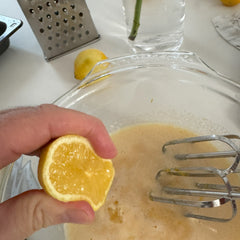
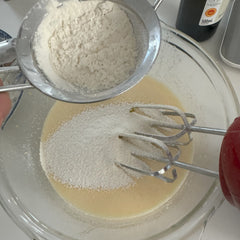
2. Combine. Add the olive oil, water, lemon zest and juice. Fold in the flour sifted with the baking powder. Mix until smooth. Let it rest for 10 minutes.
3. Bake. Pour into a greased tin. Bake at 160–165 °C with top and bottom heat for one hour, or until a skewer comes out clean.
4. Turn out. Remove from the tin and cool on a wire rack.
5. Glaze. Mix the icing sugar with lemon juice to form a thick paste. Spread over the cake while still warm — not hot, not cold. Finish with a scattering of lemon zest.
Cook's notes
For an even lighter sponge, add half a sachet more baking powder. The difference is quite marked.
The glaze is the trickiest part. It needs to be thick and pasty, not runny. Start with two tablespoons of juice and add the third only if needed. Too much liquid and it will not set properly.
Sifting the flour gives a better result, but if you are short on time, the cake turns out perfectly well without it. Not worth losing sleep over.
If you are curious about what lemons can do beyond the kitchen, we have an article on lemons, mandarins and the immune system.
Frequently asked questions
What sort of lemon works best?
A ripe one with aromatic skin. Valencia lemons picked from the tree have more essential oils in the peel and more juice. The difference shows in the zest and in the glaze.
Can you skip the glaze?
You can. The cake is good on its own, but the lemon glaze adds a sharp-sweet contrast that completes it. Try both and decide.
How long does it keep?
In a sealed container at room temperature, three to four days without trouble. Well wrapped in cling film, even longer. Without the glaze, it freezes well too.
Does it work with orange instead of lemon?
It does, but it becomes a different cake. With orange it is sweeter and less tart. Use the zest of one orange and half a glass of juice. Works well, but the character changes.