

Article: Oranges and health: what we know and what we won't promise you

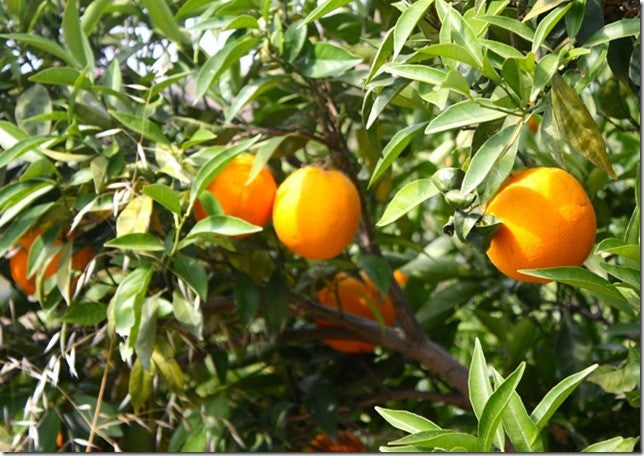
Oranges and health: what we know and what we won't promise you
Every October, when the citrus season starts in Valencia, the other season starts too: the one for wellness articles with photos of smiling people hugging oranges. Lists of superfoods for your defences, and mugs of ginger and lemon that nobody finishes. Plus some magic powder or other at 39 euros a jar.
We are not a pharmacy. We are an orchard in Valencia, going since 1917, and what we know about oranges we know mostly from eating them. This page gathers what science and European law allow us to say about them, which is quite a lot, and what we will not promise you, which is also quite a lot. Miracles are in short supply. Oranges, less so.
Vitamin C: the six statements that can be made
In the European Union, what a food may say about health is not decided by whoever sells it. It is decided by EFSA, the European Food Safety Authority, and set down in Regulation (EU) No 432/2012. For vitamin C there is a closed list of authorised statements, and only a food that is a "source of vitamin C" may use them, meaning it provides at least 15% of the daily reference intake (80 mg) per 100 grams, roughly 12 mg.
The orange clears that bar without breaking a sweat. It has about 50 mg of vitamin C per 100 grams, so two a day get you to an adult's reference intake. Tangerines come in at around 30 mg per 100 grams and lemons at about 50, although nobody eats a hundred grams of lemon in one sitting. With that established, this is what can be said, word for word:
- Vitamin C contributes to the normal function of the immune system.
- Vitamin C contributes to the reduction of tiredness and fatigue.
- Vitamin C contributes to normal collagen formation for the normal function of skin, bones, cartilage, gums, teeth and blood vessels.
- Vitamin C increases iron absorption.
- Vitamin C contributes to the protection of cells from oxidative stress.
- Vitamin C contributes to normal energy-yielding metabolism.
They all come with the same small print, which is common sense: as part of a varied and balanced diet and a healthy lifestyle. None of them says "boosts", "protects against" or "prevents". Note the verb: contributes. It is the verb of someone who helps clear the table, not of the person who laid it.
One detail that does depend on us: vitamin C breaks down with time, light and heat. That is why we care that the fruit spends few days between the tree and your kitchen. Our oranges and tangerines are picked on the day you order, never go into cold storage and leave with no wax and no post-harvest chemicals.
Spring tiredness
March arrives and, instead of energy, plenty of people feel as though someone has unplugged them. Drowsy by mid-afternoon, not much concentration, a sofa with more gravity than usual. In Spain it has a name, astenia primaveral, and it is not an illness: it is the body adjusting to longer days, rising temperatures and the clocks going forward. It usually lasts between one and three weeks.
This is where one of the authorised statements fits: vitamin C contributes to the reduction of tiredness and fatigue. And this is where the calendar fits too, because in April and until mid-May we pick Valencia Late and Valencia Midknight, the spring oranges. The rest is what your grandmother told you: regular sleeping hours, morning light, a walk rather than a nap, and coffee in moderation, which masks tiredness without removing it.
If the tiredness lasts more than three weeks or comes with other symptoms, see your doctor. At that point your fruit seller has nothing useful to add.
The fibre that stays in the juicer
This will sting for devotees of the eight o'clock juice. When you squeeze an orange, the pulp and white membranes stay in the juicer, and that is exactly where the pectin is, the orange's fibre. The white layer under the peel, the one everybody removes because it is a little bitter, is also where limonoids are most concentrated.
Does that make juice bad? No. But having only the juice is like watching a film on your phone: it works, and you miss things. If you want the fibre figures, they are in our post on orange fibre. And while we are at it: oranges also contain folate, potassium and flavonoids such as hesperidin. We mention them because they are there, not because they promise you anything.
Nobiletin: what it is and why it lives in the peel
Nobiletin is a flavonoid found mainly in citrus peel, and more in tangerine peel than in any other. It is part of the bitter note that makes the peel taste different from the segments.
Since 2011, when a team at the University of Western Ontario published a study in the journal Diabetes, it has been studied in mice for its effect on metabolism. A Japanese university, Chubu, found similar results in 2014. In mice. Nothing has been shown in people, and we are not going to be the ones to show it from an orange blog.
What we can tell you is that if you want to use the peel, the fruit cannot have wax on it. Traditional Chinese medicine has been drying tangerine peel for centuries, and we tell that story in this other post.
Headlines you will come across, and what they really say
The internet is full of phrases along the lines of "oranges prevent this" or "citrus cures that". European law forbids attributing to a food the property of preventing, treating or curing a disease, and rightly so. Even so, behind many of those headlines there is a real study. Here are the ones we know of, with a warning that applies to all of them: this is laboratory work or observation, not a promise.
Limonoids and cells in a dish. They are responsible for the bitter touch of citrus and have been studied since 1989. In a paper published in PubMed, limonoids extracted from lemon seeds slowed the growth of breast tumour cells in laboratory culture. That is where the headline about citrus "protecting against cancer" comes from. What happens in a dish cannot be transferred to a person. This is laboratory work, not a promise.
Naringenin and the kidney. A study in the British Journal of Pharmacology observed that naringenin, a flavonoid in oranges, lemons and grapefruit, regulated in laboratory models a protein involved in the formation of kidney cysts. The authors themselves present it as a starting point for drug research, not as a treatment. This is laboratory work, not a promise.
Vitamin C and stroke. At a meeting of the American Academy of Neurology, a team from Pontchaillou hospital in Rennes compared 65 people who had suffered a brain haemorrhage with 65 healthy people: the first group had, on average, less vitamin C in their blood. It is an association in a small study. It does not show that taking vitamin C prevents anything. This is observation, not a promise.
Carotenoids and memory. A study published in Neurology in 2022 followed more than 7,000 people for over 20 years and linked high blood levels of some carotenoids with less dementia. Oranges mainly provide beta-cryptoxanthin. But people who eat more fruit also tend to move more and smoke less, and that counts as much as the fruit. This is observation, not a promise.
Folate and exam results. Researchers at Örebro University and the Karolinska Institute measured folate in almost 400 Swedish 15-year-olds and found that those with the most got better marks. The mother's level of education and the family's income also played a part. A glass of juice before the exam will not add a single mark. This is observation, not a promise.
The "ten reasons" lists. You will have seen lists claiming that oranges rejuvenate, alkalise or slim you down. None of those statements is authorised in Europe. We confess: years ago we published a list like that on this very blog. We have taken it down and replaced it with this page.
How to eat citrus without becoming an influencer
There is no need for a seven-step ritual or an açaí bowl with segments arranged with tweezers. A whole orange mid-morning is the most underrated snack there is: three minutes of peeling, no packaging and no barcode.
After lunch, a tangerine. The body has been dealing with fruit sugar for millions of years and with oat milk lattes for barely a hundred; do the maths. Freshly squeezed juice, if you like it, by all means, knowing what stays in the juicer.
And grated lemon zest on almost everything: salads, pasta, fish, a yoghurt. It is what separates a home-cooked plate from a restaurant one, and it costs less than a sprig of rosemary on a plastic tray. If you are going to grate the peel, though, make sure it has no wax.
At home, in season, oranges turn up at breakfast, mid-morning, lunch, in the afternoon and at dinner. Whole, juiced, shared. Not for our health: because they taste good.
Guillermo Bas, CitrusRicus. Few people eat more oranges than I do: a couple every night, plus whatever falls my way in the orchard. With Navelate, by the kilo. If after all this anyone asks me what an orange is good for, I will tell them the truth: for eating.
Frequently asked questions
How much vitamin C is there in an orange?
About 50 mg per 100 grams of flesh, and a medium orange weighs a little more than that. The daily reference intake for an adult in Europe is 80 mg, so two oranges cover it.
Is a whole orange better than juice?
Both have the vitamin C. The pulp and membranes, where the pectin is, stay in the juicer. Juice is fine; the whole orange brings more with it.
How many oranges can you eat a day?
Two cover the reference amount of vitamin C. Beyond that, as many as you fancy within a varied diet. At home nobody is counting.
Why don't you say oranges prevent things?
Because it would not be true, and because European law does not allow it. What we can say about oranges is in the six vitamin C statements. The rest are interesting studies, which we tell you about exactly as they are.
What is different about your oranges?
They are picked on the day you order, never go into cold storage and leave with no wax and no post-harvest chemicals. There is no seal on our box. What we can tell you is what happens to your orange from the moment it leaves the tree: nothing.
To keep eating: Valencia oranges from December to mid-May, tangerines from late October to April, and lemons in our fruit and vegetables section.