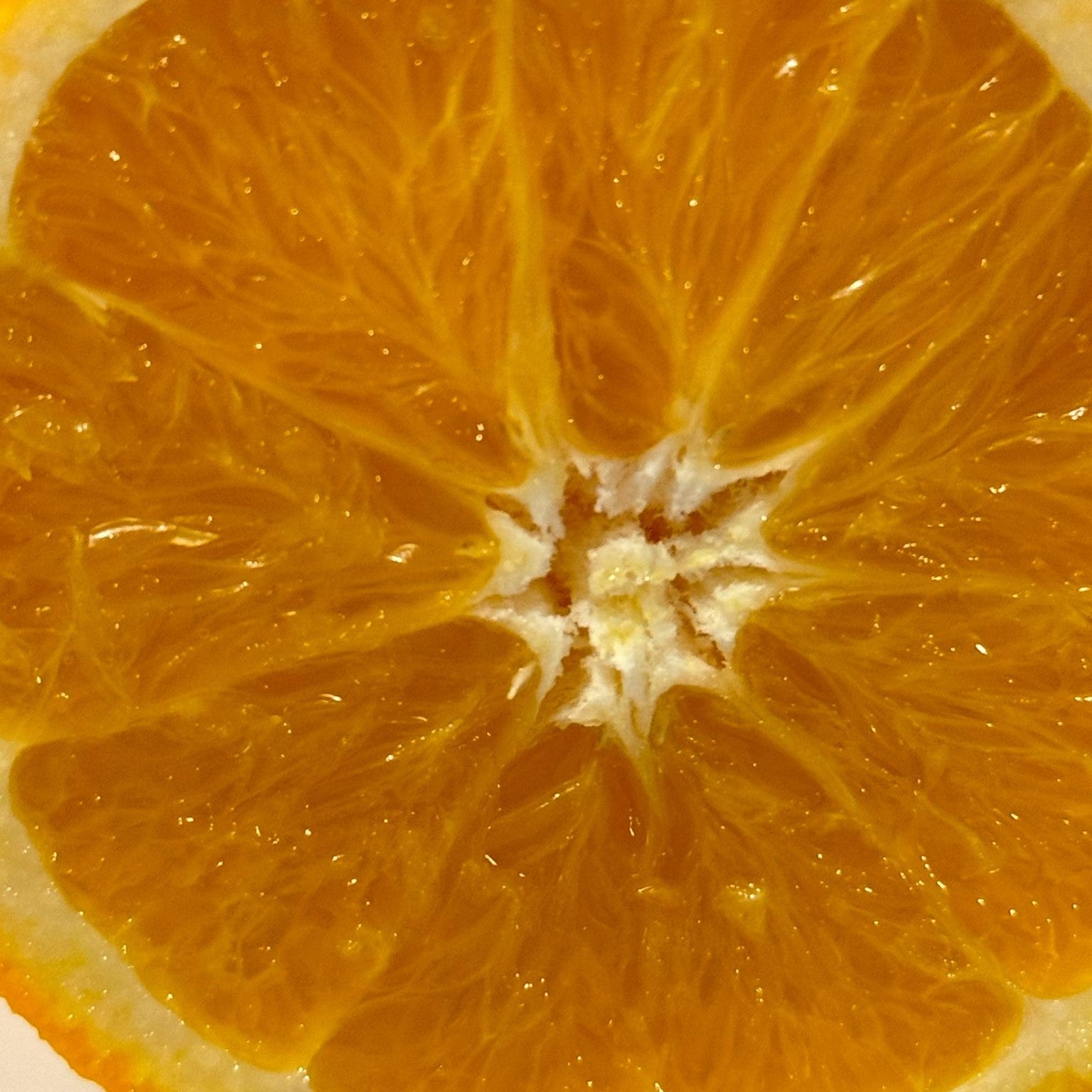
Spring weather and Valencia oranges: how spring defines the flavour
Spring decides almost everything. When you buy an orange in November, its flavour was already determined months earlier — during the weeks of flowering, fruit set and initial fruit development that take place between March and May. What happens in spring in a Valencia orange grove is invisible to the consumer, but it defines what will arrive on the table.
Spring weather is not just another factor: it is the factor. Temperatures, rain, wind, humidity. Everything influences the flowering of the orange tree and the number of fruits that set and survive until autumn.
What happens inside an orange tree in spring
Between March and April, the orange trees bloom. It is a brief, intense process — a few weeks during which the tree channels all its energy into producing flowers. Every flower is a potential orange, but most will never become a fruit. The tree naturally discards between 95% and 99% of its flowers. Only those that receive adequate pollination and favourable conditions complete the fruit set.
The fruit set is the critical moment. It is when the pollinated flower begins to transform into a small green fruit. If conditions are right, the fruit fixes itself to the tree and starts to grow. If not, it drops. Valencian farmers call this phase the \"purga\" — the tree decides how many fruits it can feed.
How each climate variable plays its part
Daytime temperature. Oranges need warmth to grow, but not too much. Temperatures between 20 and 30 °C during the day are ideal. Above 35 °C, the tree enters heat stress: it closes its stomata to conserve water, reduces photosynthesis and may shed fruit prematurely.
Night-time temperature. Cool spring nights — between 10 and 15 °C — allow the tree to rest and distribute the sugars produced during the day. If nights are too warm, the tree uses more energy than it stores. The thermal contrast between day and night is what builds the balance between sweetness and acidity that defines a good Valencian orange.
Rain. Moderate rain in spring hydrates the trees when they need it most. But heavy rain during flowering is a problem: it washes away pollen, hinders pollination and can trigger a massive drop of flowers. A week of heavy rain in full bloom can reduce the harvest significantly.
Wind. The dry, hot wind — known as \"ponent\" in Valencia — dehydrates flowers and freshly set fruits. A ponent episode in April can cause more damage than a late frost, because it strikes the most vulnerable phase of the fruit directly.
Late frosts. A frost after flowering can destroy developing fruits. In Valencia, spring frosts are rare but not impossible, and when they occur, the damage is immediate and visible: the small fruits darken and fall within days.
Good spring, good harvest
When spring cooperates — warm days without extremes, cool nights, moderate rain and no severe weather events — the trees produce fruits of uniform calibre, with high juice content and a complex flavour balance. It is no coincidence that the finest vintages of Valencian oranges coincide with stable springs.
The farmers do not simply wait. They adjust irrigation, protect young trees from wind, monitor weather forecasts and make pruning decisions that optimise air circulation. They cannot change the climate, but they can prepare the grove to make the most of it or mitigate its effects.
Why this matters for the oranges you receive
When you order fresh oranges from Valencia, the flavour you discover when you peel them was built months before — during a specific spring, in a specific grove. No two seasons are alike. That is why the oranges taste slightly different each year — and why those from a good year are memorable.
Our oranges are picked at their peak and shipped directly, with no cold storage and no post-harvest treatment. Everything that spring built arrives intact at your door.
If you would like to understand how rainfall affects citrus beyond spring, we have an article that goes into detail: how rain affects citrus.
Frequently asked questions
Why is spring so important for oranges?
Because it is when the orange tree flowers and sets its fruit. The weather conditions during those weeks determine how many fruits survive, their calibre and their flavour potential. A poor spring can reduce the harvest and affect quality for the entire season.
What temperature is ideal for orange trees in spring?
Between 20 and 30 °C during the day and between 10 and 15 °C at night. That thermal contrast allows the tree to accumulate sugars and develop the balance between sweetness and acidity.
Can rain ruin the blossom?
Yes. Heavy rain during flowering washes away pollen and prevents pollination. A week of heavy rain in full bloom can significantly reduce the number of fruits that set.
Do oranges taste different every year?
Yes, and that is perfectly normal. The flavour depends on the weather conditions of each season. The variations are subtle but real — it is what makes fresh fruit a living product, not an industrial one.