Moro blood orange: the Sicilian variety we grow in Valencia
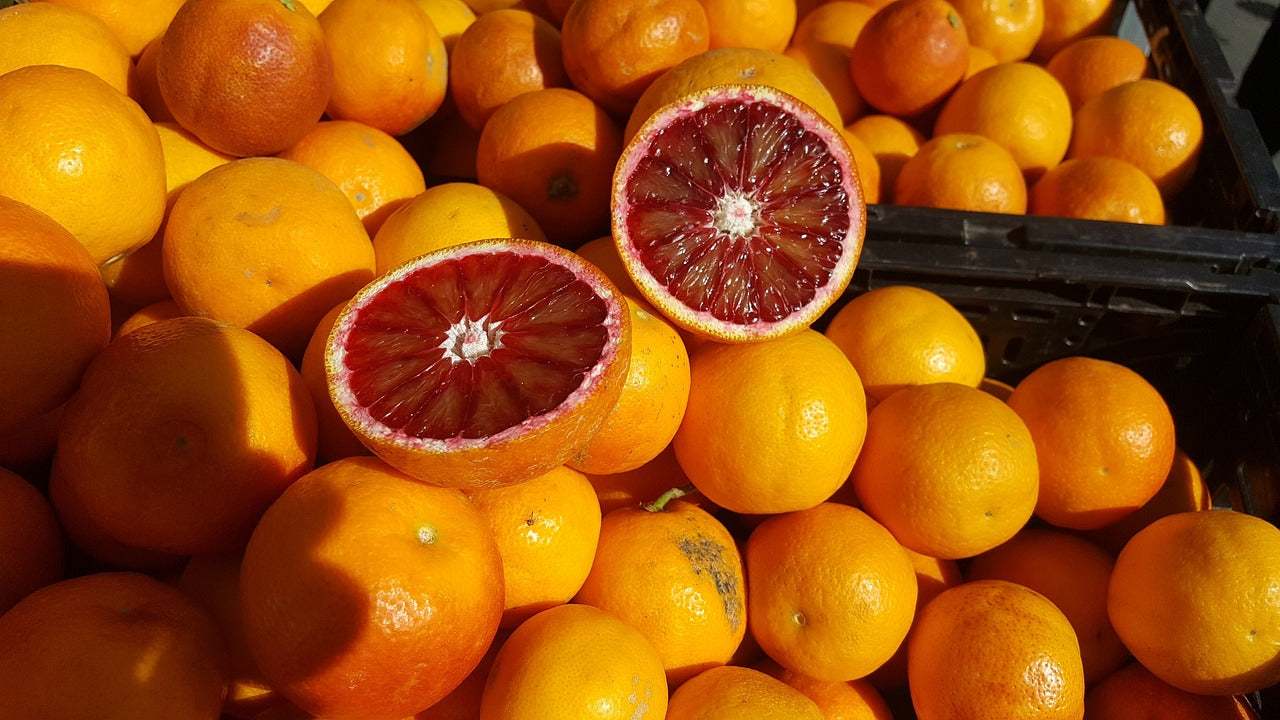
If you think all oranges are orange, the Moro will surprise you. This Sicilian variety, originally from the Catania region, stands out for its intensely garnet flesh that can range from deep ruby to near-black. It is not a dye or a trick — it is the result of anthocyanins, natural pigments that develop when the tree experiences marked temperature swings between day and night.
At CitrusRicus, we grow Moro oranges in our Valencia grove. The Mediterranean climate — mild winters, cool nights — provides the conditions for these pigments to express themselves. The result is a fruit whose flavour resembles no other orange: notes reminiscent of raspberry, blackberry and a pleasant hint of bitterness.
What makes the Moro blood orange different
The blood orange family includes several varieties — Tarocco, Sanguinello, Moro — but the Moro has the most intense pigmentation. While the Tarocco shows rosy veining and the Sanguinello a moderate red, the Moro develops a deeply garnet flesh.
That colour comes from anthocyanins, phenolic compounds also found in blueberries, black grapes and red cabbage. Anthocyanins are antioxidants that contribute to the protection of cells from oxidative stress. Like any citrus, the Moro provides vitamin C, which contributes to the normal functioning of the immune system — a fact recognised by EFSA, not marketing.
On the palate, the Moro offers a complex profile: less sweet than a Navel, with balanced acidity and red-fruit nuances that conventional oranges lack. The texture is juicy and the flesh slightly firmer.
How to use Moro blood oranges in the kitchen
The Moro is more than a decorative orange. Its flavour profile opens possibilities well beyond a simple table fruit.
Fresh juice. Moro juice has a spectacular garnet colour and a taste that recalls a blend of citrus and red berries. Ideal on its own or as a cocktail base.
In salads. Thin Moro slices with fennel, black olives and a drizzle of olive oil. The contrast between the orange’s bitterness and the aniseed sweetness of fennel works wonderfully.
As a sauce for meat or fish. Moro juice reduced with a touch of honey and rosemary makes a sauce that pairs beautifully with duck, pork or salmon.
In baking. Moro zest and juice bring colour and flavour to cakes, mousses or homemade sorbets.
Simply eaten fresh. Peeled and eaten as it is, the Moro is a tasting experience in its own right. Its complex flavour surprises those expecting a conventional orange.
The Moro in Valencia: why it works
The blood orange is traditionally associated with Sicily, and with good reason: Mount Etna creates a microclimate with large thermal swings that encourage anthocyanin production. But Sicily does not hold a monopoly on those conditions.
The Valencia plain also offers mild winters with cool nights, especially between December and February. These temperature variations, combined with rich soil and generous sunshine, allow the Moro to develop its characteristic pigmentation.
Our blood oranges arrive with no post-harvest treatment — no wax, no fungicides. The fruit that reaches your door is the same one we pick in the grove. If you want to understand how climate affects our citrus, we cover it in detail in another article.
Frequently asked questions
When is Moro blood orange season?
The Moro is generally available from January to March. It is a winter variety whose pigmentation needs cold night-time temperatures to develop fully.
Is the Moro blood orange naturally that colour?
Yes. The garnet colour is produced by anthocyanins, natural pigments. It is neither artificial nor the result of genetic modification. The intensity of the colour varies depending on each season’s climatic conditions.
What does the Moro taste like compared with a normal orange?
The Moro is less sweet than a Navel and has notes of raspberry, blackberry and a pleasant hint of bitterness. Its profile is more complex and recalls red berries more than conventional citrus.
Can you use the zest of a blood orange?
Yes, provided it has no post-harvest treatment, like ours. Moro zest is aromatic and brings a citrus touch to baking, infusions or savoury dishes.