

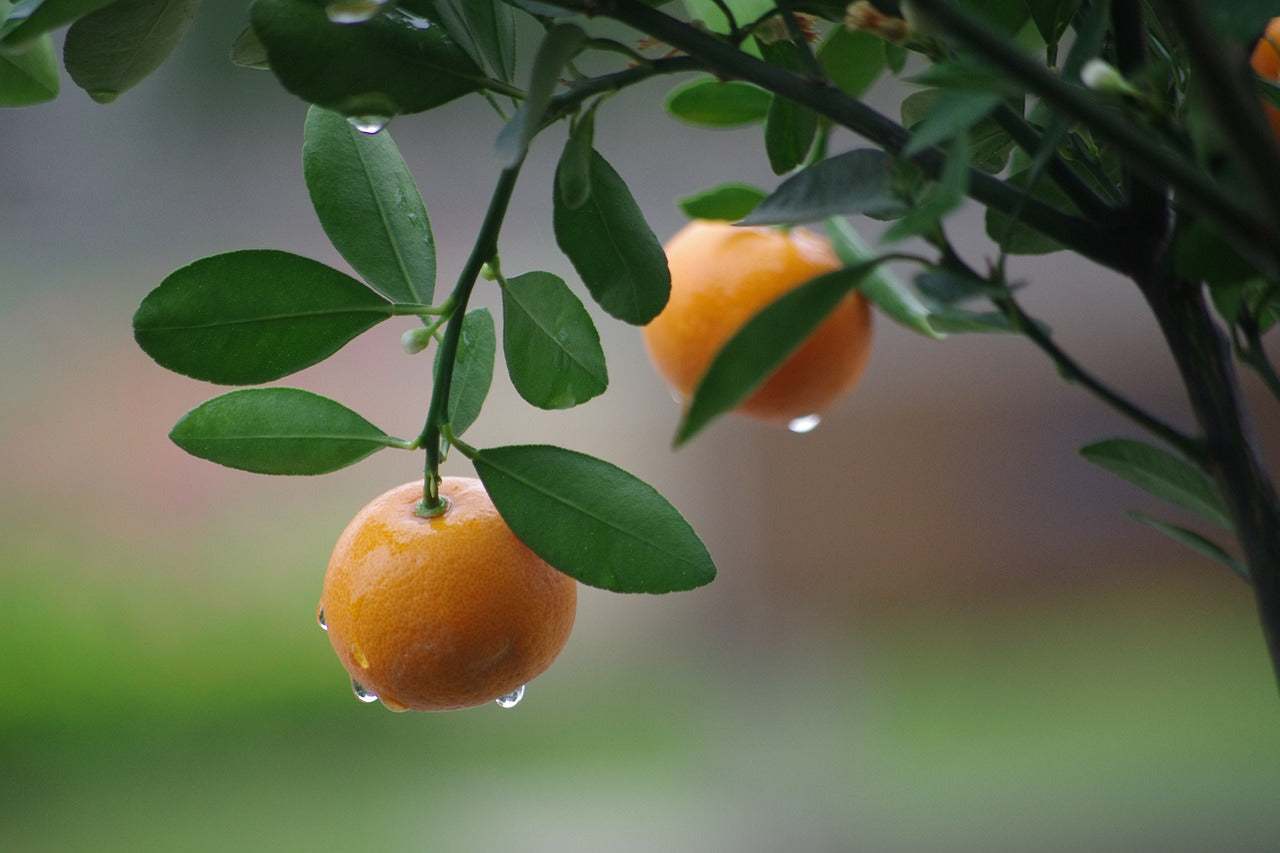
How does rainfall affect citrus?
Every September, Valencia plays a hand against the sky. The late-summer rains can be the best thing that happens to an orange tree — or the worst. It depends on how much water falls, for how long, and how the land is prepared. There is no middle ground: the water that gives life can also drown.
If you have ever seen an orange grove after a September storm, you know what we mean. Shining leaves, fruit gaining weight, dark damp earth. But also puddles that will not shift, drooping branches and that smell of saturated soil that puts any farmer on edge.
What happens to citrus when it rains
Orange trees need water. After a Valencian summer — months of dry heat where controlled irrigation keeps the trees alive but thirsty — the September rain is like a reprieve. Rainwater penetrates the soil better than drip irrigation, carries nutrients down to the roots and washes the dust from the leaves, improving photosynthesis.
The fruit responds quickly. It gains volume, the skin stretches, the juice content rises. This is the stage when the orange begins to fill its segments. Without that deep hydration, the fruit stays smaller and less juicy. Valencian farmers have waited for those first September rains for generations, reading them as a sign that the season is off to a good start.
When rain stops being good news
The problem starts when it does not stop. Valencia knows this well: the torrential autumn rains can dump in a few hours what normally falls in a month. And an orange tree, however much it needs water, is not built to swim.
Excess water waterloggs the soil and suffocates the roots. Without oxygen, the roots begin to rot — a process invisible from outside until the damage is already serious. Prolonged moisture also favours fungi: Phytophthora and Alternaria find a waterlogged field their ideal setting.
There is an effect that surprises many people: when an orange tree absorbs too much water, the fruit dilutes. Literally. The segments fill with extra water, the sugars and acids are thinned, and what was an orange with intense flavour becomes an insipid one. It is like adding water to juice: the volume goes up, but the taste disappears.
How fields in Valencia are protected
Valencian farmers cannot control the rain, but they have been learning to manage it for centuries. Some practices are ancestral; others have been refined through the experience of difficult seasons.
Land drainage. A well-prepared field moves water out quickly. The clay soils in some parts of Valencia hold more water and need more elaborate drainage systems. The sandy soils elsewhere drain on their own. Knowing your land is the first line of defence.
Strategic pruning. A well-pruned tree allows air to circulate between the branches. Natural ventilation reduces ambient moisture inside the canopy and makes it harder for fungi to take hold. It is no coincidence that pruning is done before the rainy season.
Irrigation adjustment. When it rains, the irrigation is switched off. Sounds obvious, but automated irrigation sometimes keeps running in the rain if nobody adjusts it. Experienced farmers check their systems after every spell of rain.
Constant vigilance. After heavy rain, you need to get to the field as soon as possible. Check the roots, look for yellowing leaves, confirm the water is draining away. The first days after a storm are the most critical.
Why this matters for the fruit you receive
When you buy fresh Valencia oranges, what you receive is the result of how every variable has been managed over months: irrigation, pruning, drainage, the response to rain. There are no shortcuts. A poorly managed field produces mediocre fruit even if the variety is excellent.
Our farmers know every plot, every soil type, every spot where water collects. When the September storms arrive, they do not improvise. And you can taste it in the fruit that reaches your door: oranges with just the right balance of sweetness and acidity, full of juice, with no post-harvest treatment.
If you want to understand how tree-ripening changes the flavour and composition of the fruit, we have an article that explains it with data: how citrus ripen — from blossom to the perfect fruit.
Frequently asked questions
Is September rain good or bad for citrus?
It depends on the amount. Moderate rain hydrates the trees, washes nutrients into the soil and helps the fruit grow. Excess water waterloggs the roots, encourages fungi and can dilute the flavour of the fruit.
Why do oranges lose flavour with too much rain?
Because the tree absorbs more water than the fruit needs. The segments fill with extra water, which lowers the concentration of sugars and acids. The result is a larger orange with less flavour.
How can I tell if my oranges have suffered from excess rain?
An orange affected by excess water is lighter than expected for its size, has softer skin and the flavour is flat, lacking the usual acidity and sweetness. The oranges you receive from CitrusRicus are selected after every spell of rain to discard affected fruit.
Does rain affect the vitamin C in citrus?
Vitamin C keeps well in the fruit as long as it remains on the tree. What degrades vitamin C is the time elapsed after picking, not the rain. Vitamin C contributes to the normal functioning of the immune system, according to EFSA.


